


Pluto occupies a distinct place in modern astrology. Unlike the seven classic astrological planets (Sun to Saturn), Pluto wasn’t part of the systems ancient astrologers developed; it entered the birth chart only in the twentieth century. And yet, few celestial bodies have become so charged with psychological meaning in contemporary astrological thought.
Today, Pluto is widely linked to psychological depth, transformation, power, shadow work, crisis, rebirth, obsession, endings and profound inner changes. Pluto transits are often described as life-altering because they press us to confront buried material. Many people experience Pluto periods with a mixture of reverence and fear.
How did a cold, distant planet discovered in 1930 – which was demoted to a dwarf planet seven decades later – take on such weighty symbolic force? Why did Pluto become central to psychological astrology, and what does it actually represent beneath the dramatic language that surrounds it? Let’s dive in.
Pluto’s Discovery and the Modern World
Pluto was discovered in 1930 by American astronomer Clyde Tombaugh during one of the most turbulent periods in modern history. The world was experiencing profound changes, not only politically and technologically, but psychologically. The certainties of the nineteenth century had begun to fracture under the weight of rapid industrialization, urbanization, mechanized warfare, economic instability and scientific revolution. Traditional structures of meaning were weakening. Humanity was entering a new relationship with power, mass society and the unconscious dimensions of human behavior.
The discovery of Pluto came between the two World Wars, in the aftermath of World War I and only a few years before the rise of totalitarian regimes and World War II. Collective trauma, mass destruction, propaganda, political extremism and technological violence had begun reshaping human consciousness on an unprecedented scale.

Psychology
At the same time, psychology itself was undergoing a revolution. Thinkers such as Sigmund Freud (1856-1939), the father of psychoanalysis, and Swiss psychiatrist Carl Jung (1875-1961) were exploring ideas that radically altered humanity’s understanding of the psyche:
- The unconscious mind
- Repression
- Dreams
- Trauma
- Instinct
- Sexuality
- Archetypes
- Hidden motivations beneath conscious behavior
The notion that human beings were not fully transparent to themselves — that unseen psychological forces shaped behavior from beneath awareness — became one of the defining ideas of the century.
This psychological atmosphere mirrors Pluto symbolism remarkably well. Unlike the visible planets known to ancient astronomers and astrologers, Pluto itself was invisible to the naked eye. It emerged through modern technology and scientific calculation, symbolically echoing the twentieth century’s growing awareness of hidden forces operating beneath the surface of ordinary life.
Science
Even scientifically, the period surrounding Pluto’s discovery reflected humanity’s increasing encounter with invisible yet immense power. The early twentieth century saw breakthroughs in atomic physics, such as the theoretical foundations of quantum mechanics, the first particle accelerators and the eventual development of nuclear technology — forces capable of massive destruction hidden within matter itself. Astrologers later drew symbolic parallels between Pluto and atomic energy, both associated with concentrated, transformative power operating beneath visible reality.
To summarize, Pluto’s discovery came about in a historical period deeply immersed in:
- Power
- Crisis
- Psychological depth
- Collective fear
- Transformation at both personal and societal levels
In many ways, Pluto became the astrological language for the unseen dimensions of modern existence.
Pluto/Hades and the Underworld
The mythological roots of Pluto add another layer of depth to its astrological meaning. In Roman mythology, Pluto was the god of the underworld, equivalent to the Greek god Hades. Modern interpretations often reduce Hades to a simplistic figure associated only with death or darkness, but the original mythology is far more nuanced.
Hades was not considered evil in the mythological imagination. He was a ruler of an invisible realm that was distant, feared and mysterious, yet also necessary to the natural order of life. This underworld represented a hidden dimension beneath ordinary existence: a realm connected to death, memory, ancestral forces, buried wealth, fate and transformation.
This symbolism aligns closely with the psychological dimensions later associated with Pluto in astrology.
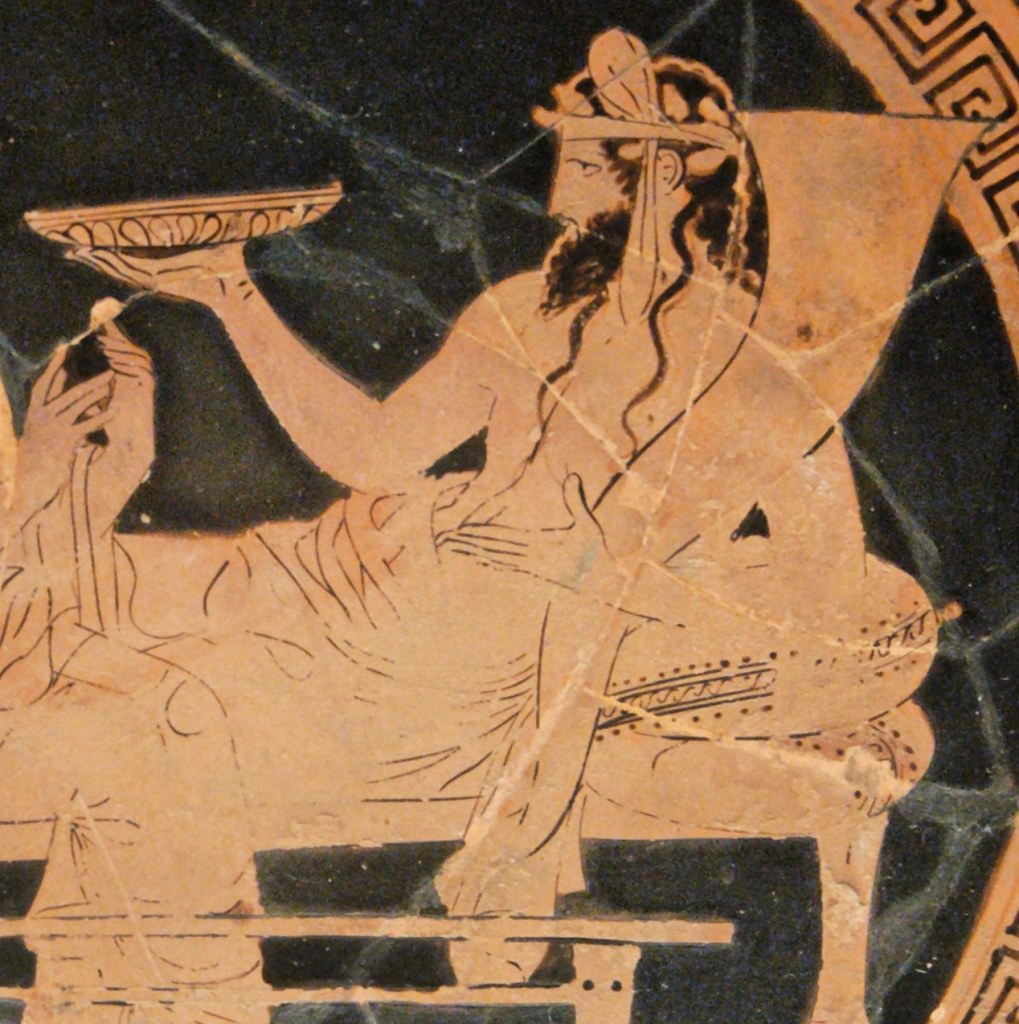
The Descent into the Underworld
In mythology, a descent into the underworld often marked a profound initiation. Heroes who entered it rarely returned unchanged. The journey downwards symbolized confrontation with forces beyond the control of the ordinary ego, such as mortality, grief, hidden truths and shadow aspects of the self.
This descent is a foundational storytelling motif found across global mythology. The earliest recorded example is the Epic of Gilgamesh from ancient Mesopotamia, where the hero journeys to the land of the dead to seek the secret of eternal life. Many other myths across different cultures contain variations of this descent motif. For example:
- Orpheus: The legendary musician descended to the underworld to rescue his deceased wife, Eurydice. His music moved Hades, but he ultimately lost her when he failed to obey the condition not to look back at her until they reached the upper world.
- Inanna (Ishtar): The Sumerian goddess of love and war descended to the “Land of No Return”, the domain of her sister Ereshkigal, the Queen of the Dead. Inanna was required to strip away her royal garments at the seven gates of the underworld before passing through and ultimately being resurrected.
- Izanagi: In Japanese mythology, the creation god Izanagi descended into Yomi (the gloomy land of the dead) to retrieve his wife, Izanami. Like the myth of Orpheus, he was forbidden to look at her, but when he broke the rule and looked upon her decaying form, he was chased out and forced to seal the entrance.
- Odysseus: In the Odyssey, the hero travels to the edge of the underworld to consult the blind prophet Tiresias so he can figure out how to navigate his way back home to Ithaca.
- Persephone & Dionysus: Persephone’s annual descent to the underworld explains the changing of the seasons, while Dionysus went to the realm of the dead to bring his mother, Semele, back to Mount Olympus.
The symbolism of the descent into the underworld points toward those moments in life when we are compelled to go beneath appearances, confront deeper truths and emerge transformed by what we encounter there.
The Symbolism of Buried Wealth
The symbolism of buried wealth is equally important. In ancient mythology, Pluto was not only associated with death, but also with the treasures hidden beneath the earth: precious metals, fertile soil and unseen resources that lay in wait for those daring enough to seek them.
The underworld was therefore linked not only to endings, but also to hidden value and regeneration, symbolizing a transformative cycle where the act of dying paved the way for new beginnings and the potential for rebirth. It contained both despair and opportunity: death was a crucial step in a larger continuum of existence and prosperity.
How Pluto Entered Modern Astrology
Pluto’s astrological meaning developed gradually throughout the twentieth century, shaped by the same historical and intellectual forces transforming modern culture itself. As astrologers attempted to interpret this newly discovered planet, they naturally drew connections between Pluto’s mythological symbolism and the atmosphere of the modern age.
At the same time, astrology itself was changing.
Earlier astrological traditions often emphasized external events and concrete prediction. But throughout the twentieth century, astrology increasingly entered into dialogue with psychology, philosophy and humanistic thought. The birth chart began to be viewed not only as a map of fate, but also as a symbolic representation of inner life and psychological development.
Thinkers such as Dane Rudhyar (1895-1985) played an important role in this transition, helping move modern astrology toward a more psychological and developmental approach, which later shaped what we call today psychological astrology. Later astrologers like Liz Greene, Stephen Arroyo and Howard Sasportas further integrated astrology with depth psychology and Jungian ideas about the unconscious, shadow and individuation.
Within this evolving astrological framework, Pluto gradually became associated with processes of profound transformation. Rather than solely a planet connected with external destruction or crisis, Pluto came to symbolize deeper psychological processes:
- Confrontation with hidden material
- Encounters with power and vulnerability
- Emotional and psychic purification
- Dismantling of exhausted emotional structures
- Transformation through exposure and renewal
Its symbolism resonated strongly because it reflected themes already emerging within the twentieth-century psychology and culture. Pluto became, in many ways, astrology’s language for the hidden dimensions of modern existence, closely associated with the processes of inner transformation, shadow work and the ongoing confrontation between the conscious self and the deeper unconscious forces operating beneath it.
Pluto in the Natal Chart
In client work, Pluto often stands out as one of the most psychologically charged areas of the natal chart. While everyone carries Pluto somewhere in their birth chart, its expression becomes especially noticeable when strongly placed by house, aspect or contact with personal planets and chart angles.
People with emphasized Pluto signatures frequently experience life with unusual emotional intensity. Even when this intensity is not outwardly visible, there is often a heightened awareness of undercurrents, hidden motivations, power dynamics and psychological complexity.
Pluto in the natal chart is commonly associated with themes such as:
- Emotional depth
- Transformation through crisis
- Control and vulnerability
- Secrecy or privacy
- Resilience
- Obsession or compulsion
- Psychological insight
In practice, Pluto placements often describe areas of life where individuals feel both deeply vulnerable and deeply powerful. For some, this may manifest as an instinctive need for self-protection or control. Others may develop an unusual capacity for emotional endurance, psychological perception or transformation under pressure. Many Pluto-dominant individuals describe feeling drawn toward subjects that explore hidden dimensions of life, such as psychology, trauma, death, spirituality, healing and taboo subjects.
Relationships also tend to become significant arenas for Pluto expression. Clients with strong Pluto contacts frequently report experiences involving:
- Intense emotional bond
- Transformative relationships
- Fear of betrayal or abandonment
- Boundary issues
- Struggles involving trust, power and emotional exposure
Important: Pluto in the natal chart does not automatically indicate trauma or catastrophe, as is sometimes suggested in simplistic internet interpretations and pop astrology. Rather, its house placement often points toward areas of life experienced with unusual depth, intensity and psychological significance.
Meanwhile, Pluto aspects to personal planets can intensify the emotional tone of those planets:
- Pluto-Sun aspects often correspond with profound identity transformation and questions of personal empowerment.
- Pluto-Moon aspects may deepen emotional complexity and sensitivity to hidden emotional dynamics.
- Pluto-Venus aspects can intensify attachment, desire and relational transformation.
- Pluto-Mars contacts may heighten issues surrounding power, anger, survival or personal will.
In psychological astrology, natal Pluto is often understood as describing an area of life where the individual is compelled toward deeper self-awareness over time. The process is not always comfortable, but it can become a profound source of emotional strength, authenticity and transformation.
Pluto Transits: Periods of Transformation
If natal Pluto describes an enduring and deep psychological signature, Pluto transits describe periods when these themes become activated more intensely in lived experience.
Because Pluto moves very slowly, its transits tend to unfold over years rather than weeks or months. People often describe Pluto periods not as isolated events, but as entire chapters of life marked by slow but deep inner and outer transformation.
In client work, Pluto transits frequently coincide with periods when existing structures begin to feel emotionally unsustainable. What once seemed stable may gradually lose vitality or meaning. Long-buried emotions, unresolved patterns or hidden tensions may rise to the surface with unusual urgency.
Common themes during Pluto transits include:
- Identity transformation
- Endings and beginnings
- Confrontation with grief or loss
- Shifts in power dynamics
- Emotional intensification
- Psychological breakthroughs
- Exposure of hidden truths
- Dismantling of old coping mechanisms
- Reconstruction of life around deeper authenticity
In practical terms, this can manifest in real life through experiences such as:
- Major career transformations
- Ending or deep restructuring of relationships
- Burnout or emotional exhaustion
- Therapy and shadow work
- Family crises
- Relocations
- Profound spiritual questioning
- Emotional withdrawal and reinvention
One of the defining characteristics of Pluto transits is that they often reveal what can no longer remain unconscious. Patterns tolerated for years may suddenly become impossible to ignore. Relationships built around avoidance or imbalance may intensify until change becomes necessary. Emotional truths that once remained buried may demand acknowledgment.
Despite their intensity, many clients later describe Pluto periods as profoundly meaningful turning points. People reclaim lost parts of themselves, build emotional resilience or emerge from crisis with a clearer sense of who they are. Like the myth, the underworld is a source of endings as well as treasures.
In many ways, Pluto transits resemble the symbolism of the Death card in the Tarot. Despite its ominous reputation, the Death card rarely signifies literal death. Instead, it represents endings, transformation and the irreversible transition from one phase of life into another. Something outdated, exhausted or no longer aligned must come to an end so that renewal becomes possible. Pluto operates in a similar way in astrology: its transits often coincide with periods when old identities, emotional patterns, relationships or structures gradually lose vitality, making space for deeper psychological growth and regeneration. In both systems, the symbolism points less toward punishment or catastrophe than toward the difficult but necessary process of transformation.

Beyond Fear-Based Astrology
Pluto carries a strong reputation for intensity that is amplified online. Many quick readings frame Pluto transits as inevitably catastrophic, a string of losses and emotional devastation. While those scenarios can and do occur, reducing Pluto to doom misses the fuller pattern: Pluto rarely strips away what matters without also demanding a greater honesty and, eventually, a deeper regeneration.
Pluto does not necessarily destroy what is healthy, alive or authentic. More often, it exposes what has become psychologically exhausted, emotionally repressed or disconnected from deeper truth. Its processes can feel uncomfortable precisely because they challenge forms of control, certainty or attachment that the psyche has outgrown, but yet we have been avoiding confronting them.
This is also why Pluto periods often coincide with increased self-awareness. What was previously hidden beneath routine, avoidance or adaptation gradually rises into consciousness.
How to Work with Pluto Transits
- Prioritize containment and support: work with a therapist or trained coach during intense transits
- Practice disciplined reflection: journaling, shadow‑work prompts might help surface hidden material safely
- Focus on somatic regulation: breath work, movement and sleep stabilize the nervous system during slow, intense Pluto work
- Set boundaries around power: notice where you cling or attempt to control and experiment with small releases
Ask yourself: what part of the self is trying to survive by remaining hidden, defended or emotionally armored?
That question captures why Pluto is central to shadow work. The goal is not to become someone wholly different but to excavate and integrate parts of self that were buried under fear or survival strategies.
Pluto and Collective Transformation
Because Pluto moves very slowly through the zodiac, entire generations are often born with the same Pluto sign. That slow orbit—Pluto completes a full circuit roughly every 248 years—means its influence by sign shows up more as generational themes than day-to-day personal changes.
Pluto placements by sign link Pluto with broader historical and cultural transformations unfolding over decades. Astrologers have long observed correlations between Pluto’s movement and periods of intensified collective confrontation with themes such as:
- Power
- Institutional change
- Technological transformation
- Social upheaval
- Psychological awareness
- Collective shadow material
For example, Pluto’s movement through Scorpio (1983-1995) coincided with increased cultural focus on psychological depth, trauma, sexuality and taboo subjects. Pluto in Capricorn (2008-2024) corresponded with widespread questioning and restructuring of institutions, authority, economic systems and professional identity.
As Pluto continues its slow movement through history, its symbolism remains closely connected with periods in which societies are compelled to confront what has become unsustainable beneath the surface of collective life.
Final Thoughts
The rise of Pluto in modern astrology reflects something deeper about modern consciousness itself.
As psychology, trauma studies and inner development became central concerns of contemporary life, Pluto emerged as one of astrology’s most powerful symbols for transformation beneath the surface of ordinary identity. Its mythology, historical context and astrological interpretation all converge around a similar idea: that what is hidden eventually seeks expression, and that genuine transformation often begins beneath the visible surface of life.
Pluto’s symbolism is rarely gentle. It asks for honesty where we may prefer certainty, depth where we may prefer simplicity, and transformation where we may wish to remain unchanged. Yet beneath its intensity lies another possibility: the gradual recovery of what is most authentic, emotionally alive and psychologically true within us.

I’m Alessandra de Castro, astrologer owner at Midheaven House. I use Astrology to help people better understand themselves, their potential and the deeper meaning woven through their life journeys.