
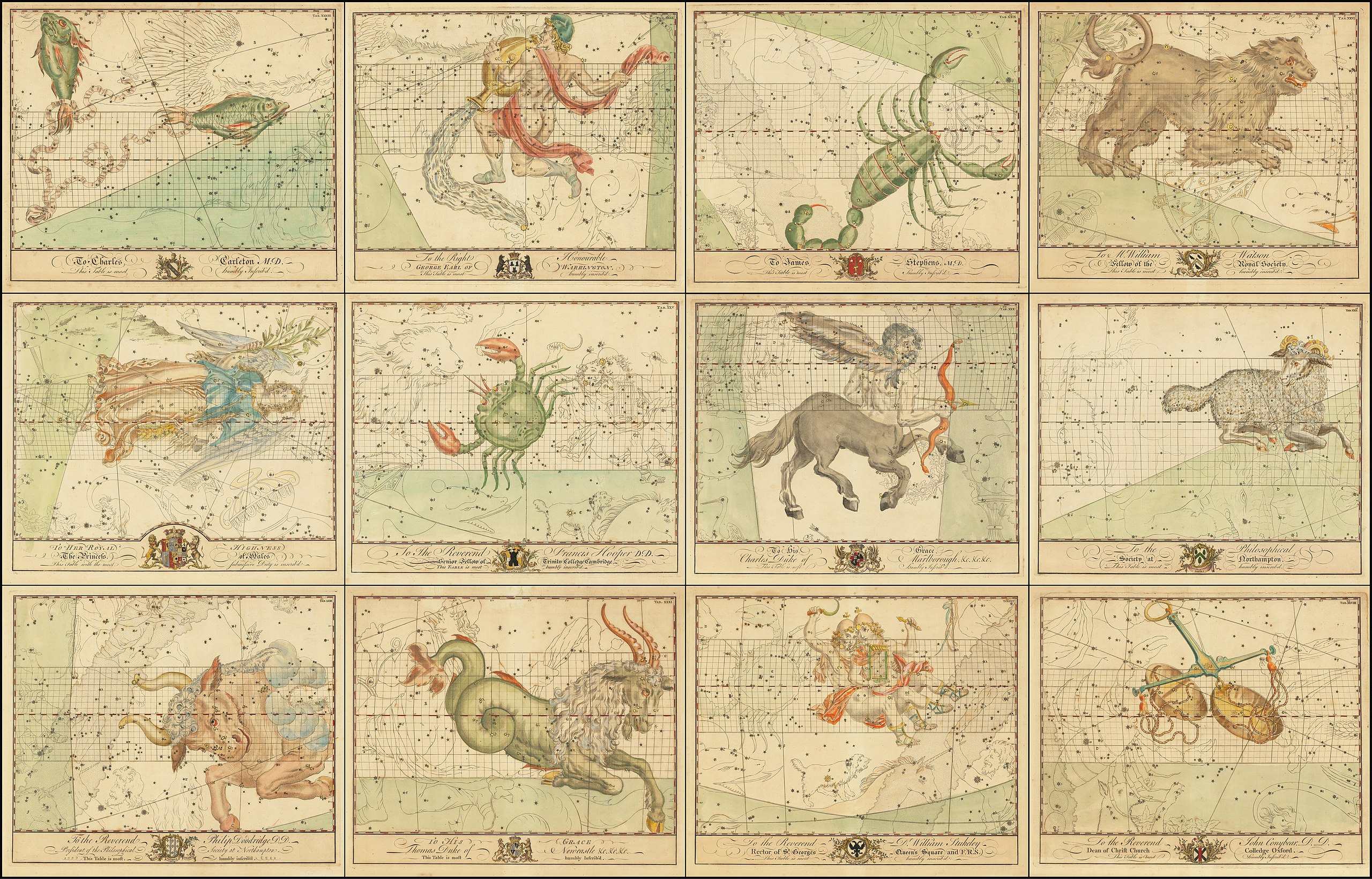
Astrology is often treated as one unified practice – a single language of signs and planets – but in reality, Astrology is a living tradition that spans various times and cultures, each with its own techniques, goals and methods for addressing the questions people pose.
Which system best maps your life and which one answers your current questions? We’ll start by distinguishing Eastern and Western frameworks, then walk through the main branches of Western Astrology and practical ways they use a natal chart and birth information as a decision‑making tool.
We’ll cover:
A Brief History of Astrology
Long before modern calendars, sky watchers linked celestial cycles to survival and social planning: when to sow, when to travel, when to celebrate. Observing the stars and planets helped communities coordinate food, work and ritual across the year.
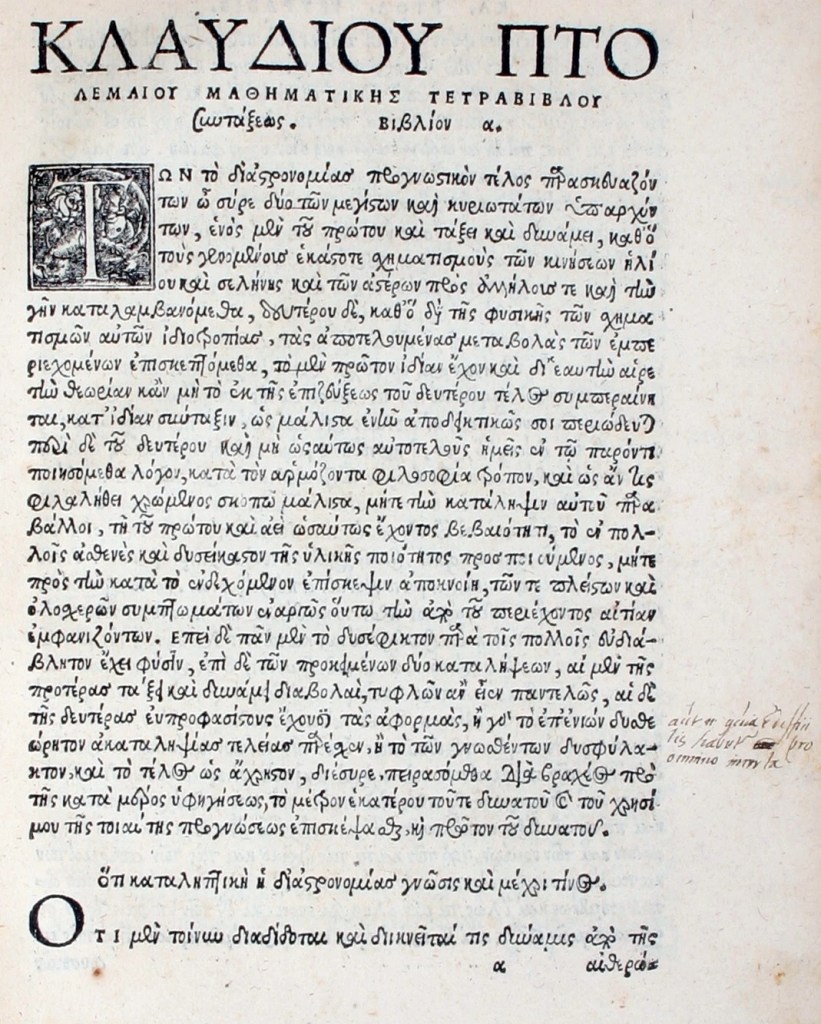
What became what we call today Modern Astrology emerged over centuries in different places. In the West, Mesopotamian astronomer‑astrologers recorded planetary cycles in the second and third millennia BCE; Hellenistic scholars later synthesized many of their techniques, a lineage summarized in Claudius Ptolemy’s Tetrabiblos (2nd century CE). In the East, Indian traditions evolved into Vedic Astrology (Jyotish), with texts and practices tracing back several millennia; Chinese Astrology with its 12‑year animal cycle and five‑element theory is likewise ancient and is traditionally dated to eras such as that of the Yellow Emperor (circa 2600 BCE).
Broadly speaking, these developments form two families of Astrology practice – Western and Eastern – that use different astronomical reference frames and philosophical assumptions. As you read on, notice how each type of Astrology emphasizes particular tools (zodiacal systems, charts, timing methods) and different questions for people to explore.
Eastern vs Western Astrology
Eastern Astrology, especially Vedic Astrology (Jyotish), typically uses the Sidereal Zodiac, which references planets against the fixed positions of the stars and constellations. More than a technical choice, this approach sits inside a worldview shaped by karma, dharma and cycles of rebirth. Placements and timing tools, like planetary periods (dashas) and precise transits, are used to map life cycles and practical outcomes across years and lifetimes.
Here, Astrology emphasizes alignment with cosmic order. A birth chart is read as a placement within a larger unfolding – patterns carried forward, conditions to be lived through, and timings that highlight when particular themes will surface.

Western Astrology, on the other hand, generally uses the Tropical Zodiac, which anchors 0° Aries to the Vernal Equinox – when Spring starts in the Northern hemisphere. It ties astrological signs and solar positions to equinoxes and solstices (the cycle of seasons) instead of fixed constellations.
A common point of confusion is that the sign names—Aries, Taurus, Gemini—match constellation names but no longer align with them in the sky. Over millennia the slow wobble of Earth’s axis (a movement called Precession of the Equinoxes) has shifted the constellations relative to the seasonal framework, so tropical signs and fixed stars are now offset. For example, someone with the sun in early Aries by tropical measurement may fall into a different sidereal sign.
That doesn’t make either system wrong – just different reference points. The signs in Western Astrology are not meant to be literal star groupings; they are symbolic divisions of the ecliptic, tied to the cycle of light (solstices and equinoxes). The confusion only appears when we assume that the names must refer to the same thing. The tropical zodiac, tied to the seasons rather than the constellations, gradually became the foundation for a more symbolic approach, one increasingly concerned with meaning, perception and inner experience.
What distinguishes Western Astrology today is not only its techniques, but its range. It contains within it both its older, fate-oriented methods and its newer, psychologically oriented interpretations. It is not a single system, but a layered tradition – one that has moved from concrete judgment to symbolic understanding, without entirely abandoning either.
It is from this Western lineage, with its internal diversity and historical evolution, that the different astrological systems we use today begin to unfold.
Hellenistic (aka Classic) Astrology: the Western Foundations
Western Astrology’s technical backbone was laid in the Hellenistic world across the Mediterranean between the late first millennium BCE and the early centuries CE, a period when Greek and Egyptian scholars codified methods for timing major life phases. This is where the core structure of the natal chart was formalized: planets, signs, houses, aspects, rulerships and dignities.
Hellenistic Astrology was precise, technical and often deterministic: the chart functioned as a map of a person’s life rather than merely a portrait of personality. An experienced astrologer read the natal chart as a structured timeline indicating likely timing for change in status, career, marriage, children, illness and other life events.
Timing techniques such as the Lots and Zodiacal Releasing divided life into intervals so astrologers could read likely themes, opportunities and challenges across the years. Practical case studies by authors like Vettius Valens (120-175 CE) and the systematizing work of Claudius Ptolemy (~100-160 CE) called Tetrabiblos transmitted these methods; Dorotheus of Sidon (1st century CE) and others further refined rules for electional practice and event timing.
Electional Astrology: Choosing the Right Moment
Electional Astrology – also called Elective Astrology – is the practical branch emerged from Classic/Hellenistic Astrology that helps you pick an auspicious moment to start something important. Practitioners used it for weddings, business launches, travel and other pivotal events. The basic idea is simple: not all moments carry the same potential; an electional chart shapes the quality of a beginning.
How a session typically works: an astrologer will gather your proposed time window, cast several candidate charts, evaluate key planets and aspects for friction or support and select a minute that reduces risk while amplifying opportunity. Expect a focused, actionable recommendation rather than a promise. Examples:
- Wedding: favor a strong Venus, harmonious angular aspects and minimal hard contacts to the 7th house.
- Business launch: aim for robust 10th‑house indicators and supportive Sun or Mercury aspects for visibility and communication.
Electional work is pragmatic, not deterministic: it maps relative risk and opportunity for a single chart so you can act with clearer intention. Its roots go back to Hellenistic practice and the work of Dorotheus of Sidon, later refined in Persian and Arabic cultures by Masha’allah ibn Athari (740-815) and Abu Ma’shar al-Balkhi (787-886). These scholars developed detailed rules for elections, particularly in political and mundane contexts – founding cities, crowning rulers, initiating major undertakings.
Today it’s used for personal and professional decisions like signing contracts, scheduling launches, choosing travel dates, elective surgeries or planning events. If you’re considering an important date, a short electional consult can give you a practical window of favorable days and the best minute within them.
Horary Astrology: Asking Questions
Horary Astrology is the practical art of answering a single, specific question by casting a chart for the exact moment that question is posed. That minute becomes the chart’s “birth,” and the planetary picture at that instant is read as a focused map of the situation often yielding precise, actionable answers when handled with care.
Best‑practice checklist for a reliable horary reading:
- Ask a single, specific question (avoid vague or compound questions).
- Record the exact local time and place when the question was asked.
- Have an experienced astrologer examine the chart’s planets, rulerships, and aspects to identify the moment’s significators and likely outcome.
Good example questions: “Will I recover the lost item?” (time and place known), “Will I get this specified job?” (clear offer and timing), or “Is this partnership likely to proceed?” These are focused, time‑bound queries that horary methods handle well.
Horary Astrology developed into a defined technique in the medieval Arabic and Persian world and was later refined in Europe by figures like Guido Bonatti (13th century) and, in the English tradition, William Lilly (1602-1681) helped standardize rules for assigning significators and judging planetary condition. Today it remains one of the closest living continuations of traditional practice. Unlike many modern Astrology branches that have shifted toward psychological interpretation, horary has largely preserved its original structure, rules and purpose.
Medical Astrology: The Body Mirrors the Cosmos
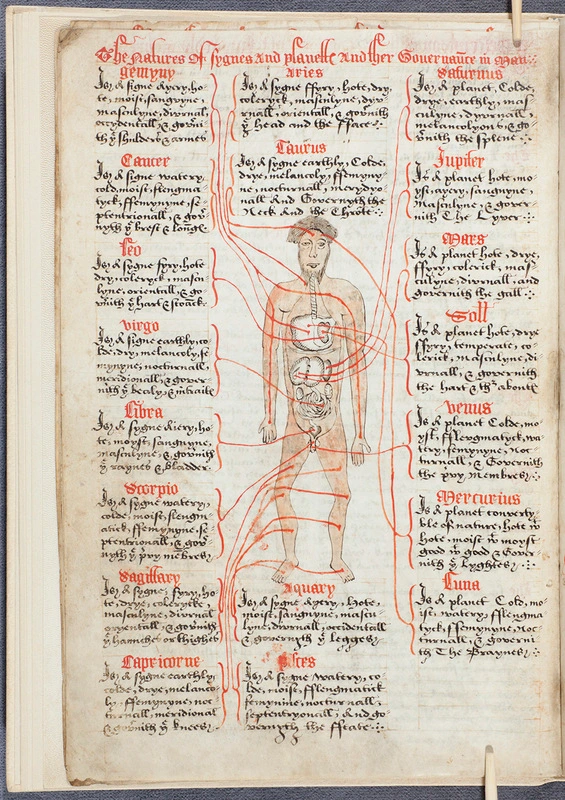
Medical Astrology is one of the oldest practical uses of the art, emerging when Astronomy, Astrology and Medicine were closely linked. At its core there is a simple assumption: the body reflects the same cosmic order seen in the sky – planets and signs were associated with organs, temperaments and cycles of vulnerability. Classical practice assessed the condition of key planets and house rulers to identify likely areas of sensitivity and used timing techniques to anticipate periods of imbalance.
Historically, Mesopotamian and Egyptian observers linked celestial patterns to outbreaks, seasons of illness and public health; Hellenistic thinkers then wove astrological technique into medical theory (including humoral ideas later developed by Galen of Pergamun (129-200 CE). The tradition was preserved and expanded in Arabic and Persian scholarship and into medieval and Renaissance Europe, where physicians were often trained in Astrology. Notable figures engaged with these ideas – Avicenna (~1000 CE) and Paracelsus (~1500 CE) among them – though practices and interpretations varied widely by time and place.
In the modern context, Medical Astrology functions as a complementary and symbolic framework – a way to notice patterns and plan preventive care, not a substitute for medical diagnosis or treatment. Always consult licensed health professionals for these – Astrology can inform awareness and prevention, not replace medical care.
How practitioners use it today:
- Pattern awareness: identifying chronic sensitivity (e.g., recurring stress or depletion) via planets and houses.
- Timing: noting transits or periods when a person may be more vulnerable and advising precautionary self‑care.
- Wellness planning: integrating chart insight into holistic strategies—nutrition, sleep, stress management, and recovery practices.
Example uses (non-clinical): tracking a stressful transit that often precedes burnout and planning extra rest, or noting a recurring vulnerability tied to a specific house and adjusting lifestyle choices accordingly.
Mundane Astrology: Mapping the Public Life
Mundane Astrology looks beyond individual lives to chart the rhythms of societies, nations and eras. Where a natal chart maps a person, mundane charts map public life – kingdoms, governments, economies, conflicts and cultural shifts – asking what is unfolding for groups rather than for a single person.
Together with Medical Astrology, this is also one of Astrology’s oldest branches: Mesopotamian observers recorded celestial omens for rulers and states, and Hellenistic, Arabic and Persian scholars later systematized the methods. Astrologers such as Abu Ma’shar wrote about world cycles and emphasized slow planetary configurations – Jupiter‑Saturn conjunctions, for example – as markers of historical change.
Modern mundane work uses ingress charts, eclipse charts and long‑term planetary cycles to map themes such as economic shifts or political tensions. Today astrologers apply the same symbolic language to more specific events such as elections, market openings or major announcements, casting event charts and tracking them through transits and progressions to gauge how future events might unfold over months and years. For example, an astrologer might cast an ingress chart for a country’s independence day or an election moment to read likely themes for the coming cycle. In Financial Astrology, for instance, similar techniques are applied to market cycles, attempting to correlate planetary patterns with investor behavior and economic trends.
Psychological Astrology: A Shift Inwards
Psychological Astrology marks a major shift in Western Astrology in the early 20th century: the chart is treated less as a fate‑sheet and more as a map of inner life. This approach reframes planets, signs, houses and aspects as expressions of drives, patterns, and emotional dynamics rather than solely predictors of external events.
Where older branches emphasized events and outcomes, Psychological Astrology focuses on how a person experiences life. Planets become psychological functions; aspects show inner tensions or resources; houses describe areas of subjective experience. The emphasis moves from what will happen to how it is experienced, helping people recognize habitual responses and open space for change.
Influenced by Depth Psychology – especially Carl Jung’s (1875-1961) theories about archetypes and the unconscious – this branch uses astrological language as a tool for self‑awareness. The natal chart sits at the center of inner work: identifying recurring patterns, defense mechanisms, relational styles and growth edges.
Typical focuses in a psychological reading:
- Emotional patterns and habitual responses
- Defense mechanisms and unconscious drivers
- Relational dynamics and attachment style
- Areas of potential growth and integration
Transits and progressions are still used, but often as indicators of psychological activation: periods when certain themes become more visible or intense. A difficult transit might be framed as an opportunity to confront a recurring inner dynamic rather than solely as an external misfortune.
Language matters: Psychological Astrology avoids absolute predictions and instead describes tendencies, options and lived experience. It complements licensed mental‑health care rather than replacing it – if chart work surfaces trauma, persistent depression or safety concerns, a licensed professional should be consulted. Many people integrate Astrology with therapy for a balanced, evidence‑aware approach.
In short, Psychological Astrology reorients the chart toward personality and process: it helps you see how you experience life so you can work with those patterns more consciously.
Esoteric Astrology: Describing the Soul Journey
Esoteric Astrology shifts focus from events or personality to questions of soul purpose. Rather than predicting circumstances, it reads the birth chart as a framework for long‑term spiritual direction and meaning.
Modern esoteric practice is heavily influenced by Theosophical writers of the early 20th century, notably Alice Bailey (1880-1949), who framed Astrology in terms of spiritual evolution and hierarchical levels of consciousness. In this reading, placements that might describe the personality can also be interpreted as signals of a larger, often slower‑moving purpose that unfolds across lifetimes.
A central distinction is between personality and soul: the chart’s familiar indicators describe habits and tendencies, while esoteric interpretation asks how those same factors might be re‑directed toward higher awareness and service. Practically, this approach is used for orientation – soul‑purpose workshops, long‑range coaching or contemplative study – rather than for short‑term prediction.
In short: Esoteric Astrology doesn’t replace psychological or traditional methods; it places them within a larger frame that emphasizes purpose and the long arc of life. For readers interested in spiritual development, it offers a language for aligning everyday choices with a broader sense of meaning.
Evolutionary Astrology: Focus on Personal Growth
Evolutionary Astrology builds on the modern turn toward meaning by giving it a clear developmental frame: the chart is read as a snapshot within a longer story of growth. Practitioners often work with placements that suggest carried patterns and potential directions for change over time, often understood in terms of past and future lifetimes.
Contemporary evolutionary work is commonly associated with astrologers like Jeffrey Wolf Green (1946) and Steven Forrest (1949), who emphasize deeper, transformative indicators in the chart. In this approach, certain placements like the lunar nodes and slow planets are read as signposts of past conditioning and future development. The focus is on trajectory: what patterns repeat, why they persist and what the chart asks you to integrate or change.
Practically, Evolutionary Astrology is used to explore persistent challenges and recurring life themes, treating transits as activations of ongoing work rather than simple predictors. It operates within a framework that includes ideas of karmic continuity or reincarnation – assumptions that some clients embrace and others do not – so practitioners typically present these interpretations as one possible lens among many.
Within the broader landscape of Astrology, Evolutionary Astrology can be seen as a bridge. It retains the introspective depth of Psychological Astrology, but reintroduces a sense of direction and purpose that unfolds over time, suggesting that the chart is not only a map of who we are, but of how we change. It marks an intersection among Astrology, Psychology and Spirituality.
Vocational Astrology: Fit and Meaning in Career
Vocational Astrology sits at the intersection of tradition and modern practice: it uses classic indicators (career houses, planetary strengths, timing) to look at occupation through a different lens. Instead of focusing on just matters of status, livelihood and role in society, as it was used traditionally, Vocational Astrology now seeks to find what kind of work fits someone’s nature and capacity, which includes meaning, fulfillment and personal alignment.
In practice today, Vocational Astrology uses the natal chart to explore types of intelligence, communication style, ideal work environment, talents and strengths, and which career paths would best fit them. It can help clarify why certain paths feel aligned while others do not, or why periods of change arise at particular times.
In practice, Vocational Astrology can help people in these scenarios:
- Young people ready to enter the job market, trying to understand which career paths would fit them best
- College students picking a major
- Adults looking for a career change
- Retirees wanting to enjoy the next chapter of their lives
Synastry: Relationships Beyond Love
Synastry (Relationship Astrology) is often reduced to romance, but that’s a narrow use of a much broader tool. At its core, synastry examines how two charts interact as systems – how perception meets perception, how needs meet responses, how timing and temperament intersect. It applies anywhere there is ongoing exchange between people, examining how two or more birth charts interact, studying the space between people to see how one person’s planets activate, support or challenge another’s. It’s less about labeling compatibility and more about understanding dynamics: attraction, friction and the potential for growth.
At a technical level, synastry compares placements across charts – planets falling into another’s houses, aspects formed between planets and the balance of emphasis and tension. A reading will typically highlight where two people align emotionally and practically, and where their differences create challenges that require awareness.
Love Synastry
In love relationships, synastry is used to explore attraction, emotional bonding, sexual chemistry and long-term dynamics. It can show why a connection feels immediate or compelling, where mutual understanding flows naturally, and where friction arises. Importantly, it does not divide relationships into “good” or “bad.” Some of the most binding connections contain tension; what synastry reveals is how that tension operates and whether it leads to growth, repetition or conflict.
Family Synastry
In family relationships, the emphasis shifts. Synastry can illuminate differences in temperament between parents and children, emotional expectations within partnerships or recurring patterns across generations. It is especially useful in understanding asymmetry—why one person feels responsible, another reactive; why communication breaks down in specific ways. Here, the goal is not compatibility, but comprehension of roles and dynamics that are often long-standing and deeply embedded.
Business Synastry
In professional and business relationships, synastry is applied to collaboration. It can highlight complementary strengths, differences in decision-making, communication styles and approaches to authority or responsibility. In partnerships, it may show whether two people naturally align in direction or whether their priorities diverge. In team settings, it can help explain why certain collaborations are productive, while others stall despite individual competence.
There are also more situational uses. Synastry can be applied to client–practitioner relationships, where trust, projection and expectation play a role. It can be also used in creative collaborations, where timing, inspiration and shared vision matter.
Alongside synastry, many astrologers use the composite chart, which blends two charts into a single structure representing the relationship as its own entity. If synastry shows interaction, the composite shows form – what the relationship tends to become over time, independent of either individual.
Locational Astrology
Locational Astrology explores how place changes the expression of a birth chart. The chart itself stays the same, but geography can emphasize different themes – visibility, relationships, inner retreat or instability – depending on how planetary lines and house placements fall across a map.
While earlier traditions occasionally considered geography – especially in Mundane Astrology, where regions and nations were linked to signs and planets – there was no systematic method for analyzing how an individual’s birth chart changes expression across locations. That level of precision only becomes possible much later, as astronomical calculation improves and Astrology itself shifts toward more personalized applications.
The modern foundation of Locational Astrology takes shape in the 20th century, when astrologers begin experimenting with ways to project the birth chart onto the globe. From this point, several distinct techniques emerge, each approaching the question of place from a different angle.
Astrocartography
Astrocartography, developed by Jim Lewis in the 1970s, maps the positions of planets at the moment of birth onto the Earth, creating lines that show where each planet was rising, setting, culminating (Midheaven) or at the nadir (IC). These lines are interpreted as zones where the corresponding planetary themes become more prominent.
In practice, Astrocartography is used to explore relocation, travel and opportunity, identifying places that may emphasize career visibility, relationships, creativity or challenge. It is the most visually intuitive form of Locational Astrology and remains the most commonly used today.
Relocation Astrology
Relocation Astrology is more technical and, in some ways, closer to traditional chart interpretation. Here, the birth chart is recast for a different location, adjusting the house structure while keeping planetary positions the same. The result is a new chart that reflects how life may be experienced if one were living in that place.
Unlike Astrocartography, which highlights zones of emphasis, relocation charts show how the entire structure shifts – which areas of life become more central, which recede and how planetary conditions are recontextualized. This method is often used for deeper analysis when someone is seriously considering a move.
Local Space Astrology
Developed by Michael Erlewine in the 1970s, Local Space Astrology takes yet another approach. Instead of projecting the chart onto the globe through meridian lines, it maps the direction of planets from the birthplace outward, creating a compass-like system. Each planet corresponds to a direction in physical space.
This technique is often used in a more immediate, experiential way – examining how different directions or environments feel, sometimes even within the same city or home. It has been applied not only to relocation, but also to spatial design and orientation, suggesting that planetary influences can be engaged through movement and positioning.
Conclusion
What begins as a single word – Astrology – unfolds into a landscape of methods, purposes and perspectives that do not always align, yet belong to the same tradition.
From its earliest forms, Astrology was a practical art. It observed, calculated and answered questions about life as it is lived: when to act, what to expect, how circumstances would unfold. Over time, that same structure was turned inward, becoming a language for experience, meaning and self-understanding. And from there, it expanded further into relationship, place, vocation and spiritual direction. Astrology is a living tradition that keeps redefining its purpose. Different types of Astrology answer different kinds of questions, using the same chart and symbolic language in distinct ways.
None of these approaches cancels the others; they coexist and complement one another. To study Astrology, then, is to learn how many ways there are to look at the same sky, and to recognize that each way reveals something real, but never the whole.
If you’re wondering which system fits your current life questions, start with the questions themselves: are you asking when to act, what will happen, how you experience life, where to go or what your work should be? Answer that, and the appropriate branch usually follows. If you’d like an initial exploratory consultation to find the best approach and experiment Astrology’s potential, feel free to contact me!

I’m Alessandra de Castro, astrologer owner at Midheaven House. I use Astrology to help people better understand themselves, their potential and the deeper meaning woven through their life journeys.